Turnitin uses five colors to show your similarity score at a glance. Blue means no matching text, green is a low score, yellow is moderate, orange is high, and red is very high. The color is just a visual shortcut for the percentage. It does not tell you whether you plagiarized.
A red score looks scary, but it only means a large share of your text matched other sources. Those matches could still be quotes and citations, so the color is a prompt to check, not a judgment.
Key takeaways
- The color maps directly to your similarity percentage.
- Blue has no matches. Red is the highest range.
- Color is a quick signal, not proof of plagiarism.
- The colors can look different across systems like Canvas or Moodle.
- A red score is usually fixable once you read the report.
What does each Turnitin color mean?
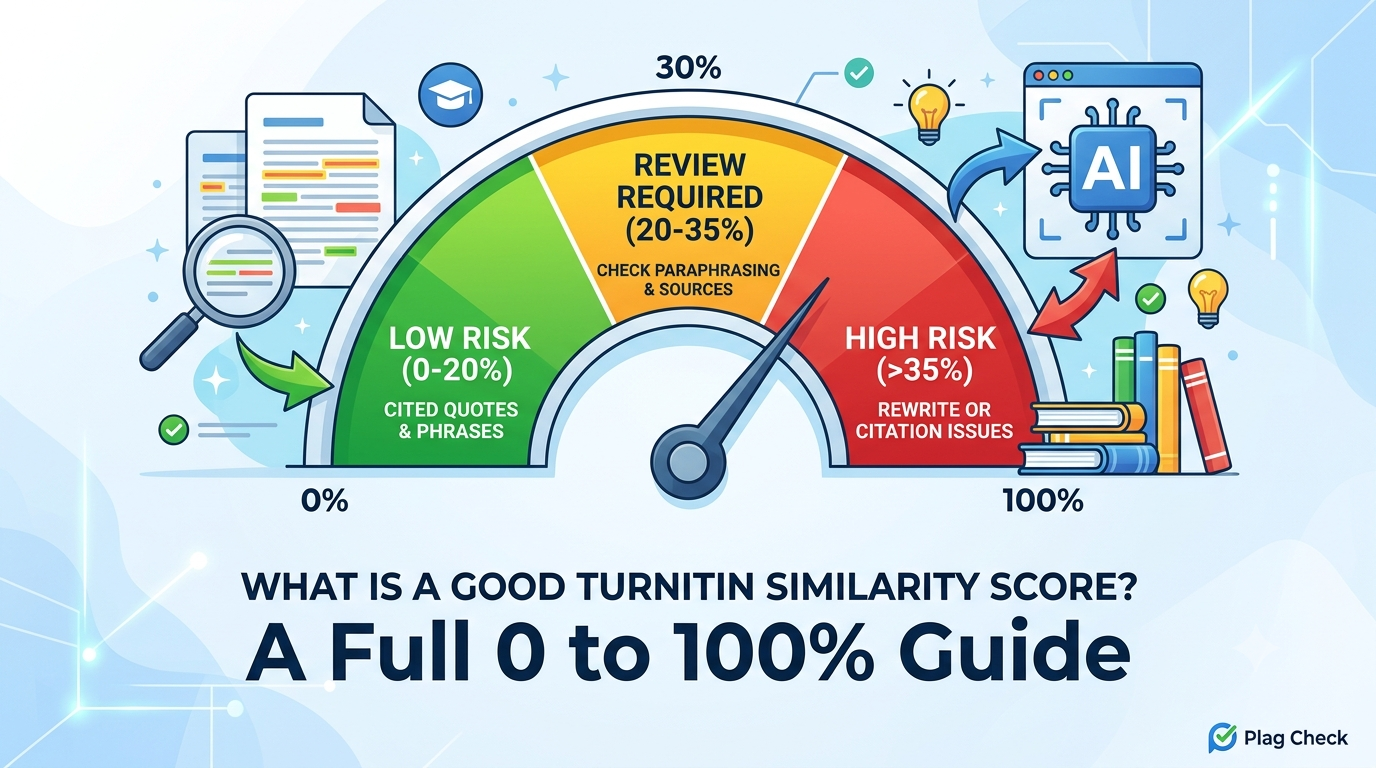
| Color | Similarity range | What it suggests |
| Blue | No matching text | Nothing matched the database. |
| Green | 1 to 24% | Low matching. Common and usually fine. |
| Yellow | 25 to 49% | Moderate. Worth reviewing. |
| Orange | 50 to 74% | High. Revise matched sections. |
| Red | 75 to 100% | Very high. Rework before submitting. |
The exact colors can vary slightly depending on how your school set up Turnitin, which is normal and does not change your result.
Should I worry about a red score?
Not before you read the report. A red score means a lot of matching text, but you still need to see where it came from. If most of it is cited quotes or a matched reference list, you can often bring the number down by excluding them. We show you how in excluding quotes and bibliography.
If the matches are copied or poorly paraphrased, the fix is rewriting them properly. See how to reduce your similarity score and our full breakdown of what each score means.
Is there a color for the AI score?
The AI writing score works differently and is reported separately from the similarity colors. If you want to understand that number, read the Turnitin AI score explained.
Frequently asked questions
What does a red Turnitin score mean?
Red means a similarity score of roughly 75% or higher. It signals a lot of matching text, but you should read the report before assuming it is plagiarism.
Is green a good Turnitin score?
Green means a low similarity range, usually 1 to 24%. It is generally a good sign, as long as the matches are cited.
Why is my Turnitin score blue?
Blue means Turnitin found no matching text in your submission.