A good Turnitin similarity score is usually anything under 15 to 20%, as long as the matches come from properly cited quotes, references, and common phrases. There is no official pass mark. Every university, course, and instructor sets its own limit, so the right number depends on your assignment, not a global rule.
That said, the percentage alone never tells the full story. A 5% score can still be a problem, and a 25% score can be completely fine. What matters is where the matches come from and whether you cited them. This guide breaks down every range so you know exactly where you stand before you submit.
Key takeaways
- There is no universal “safe” Turnitin score. Your course or department sets the threshold.
- Under 15 to 20% is widely treated as low risk when matches are cited correctly.
- The similarity score shows matching text, not proof of plagiarism.
- A high score is often caused by quotes, references, and template text, all of which are fixable.
- Want to see your real number first? You can check your Turnitin score before you submit.
What does a Turnitin similarity score actually mean?
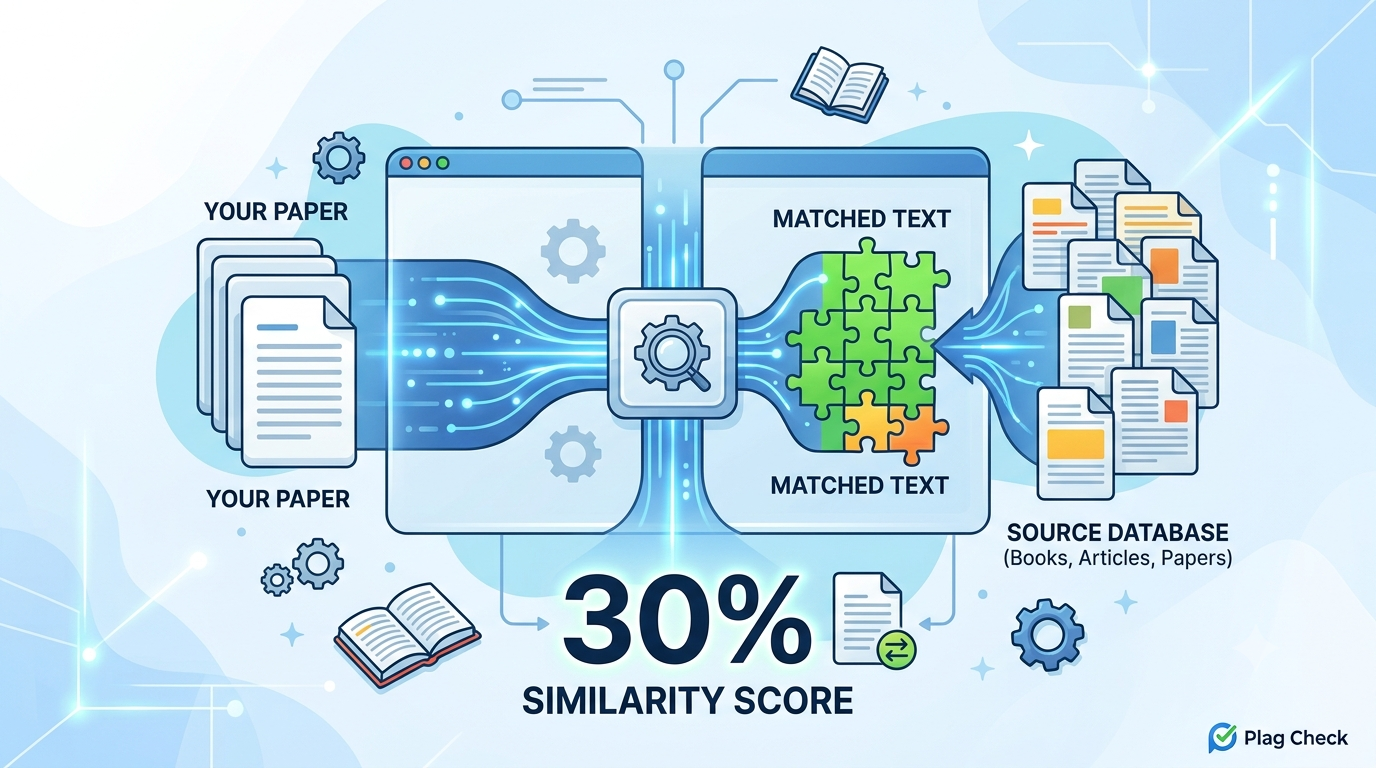
Your similarity score is the percentage of your writing that matches text already in Turnitin’s database. That database includes student papers, journal articles, books, and billions of web pages.
When Turnitin finds matching phrases, it highlights them and adds them to your score. So a 22% score means roughly a fifth of your document matched something Turnitin has seen before.
Here is the part most students miss. Turnitin does not decide if you plagiarized. It only points out where your text is similar to other sources. Your instructor reads the report and makes that call. We explain this fully in our guide on similarity score versus plagiarism.
What is a good Turnitin score by percentage?
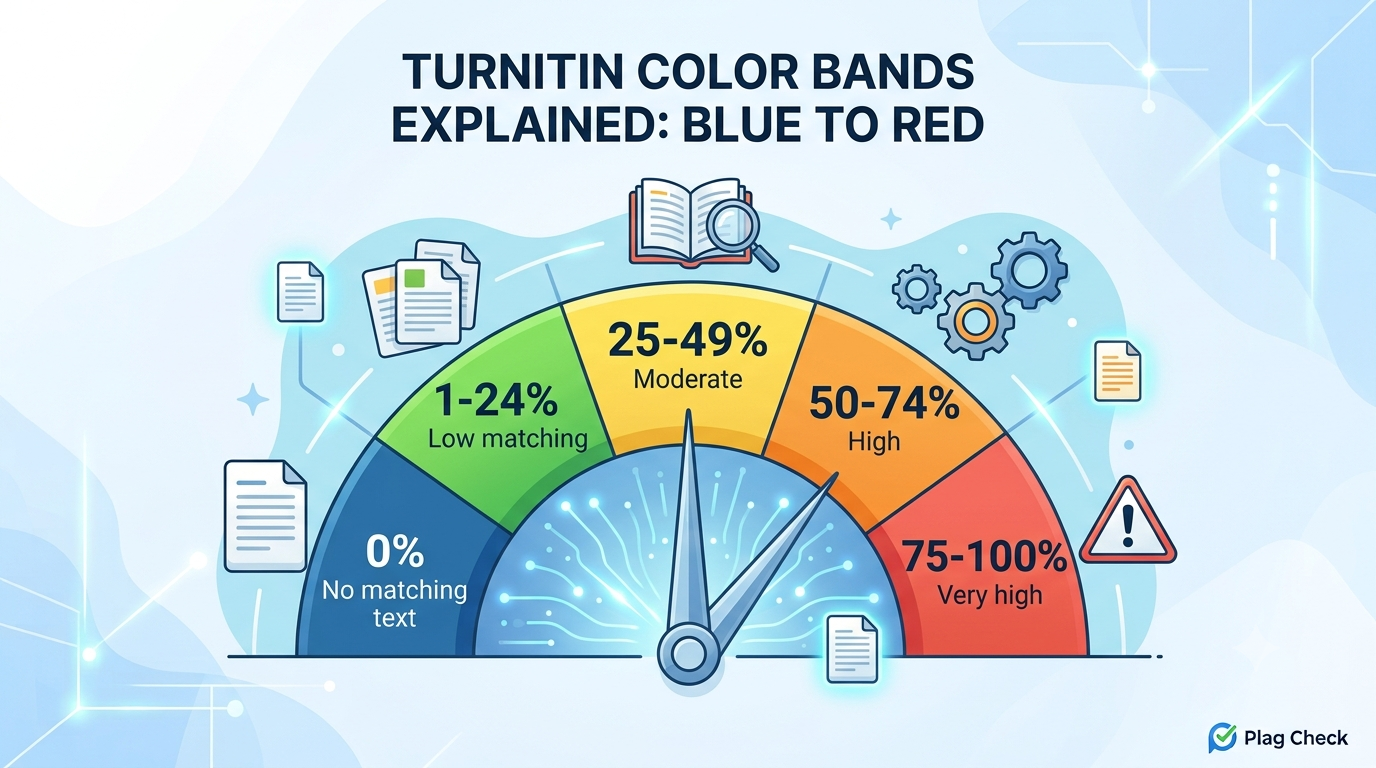
Use this table as a quick reference. We call it the Plag Check Score Bands, and it reflects how most instructors read a report rather than a fixed rule.
| Score range | What it usually means | What to do |
| 0 to 10% | Very low. Original work with light, cited matching. | Usually nothing. Check the matches are quotes or references. |
| 11 to 20% | Low to moderate. Common for essays with sources. | Review the report. Make sure matches are cited, not copied. |
| 21 to 35% | Moderate to high. Worth a closer look. | Check for over-quoting or weak paraphrasing. Tidy it up. |
| 36 to 50% | High. Likely too much copied or matched text. | Rewrite matched sections in your own words and cite properly. |
| Over 50% | Very high. A clear sign to revise before submitting. | Rework the document. Most of it should be your own writing. |
A score in the green does not always mean you are safe, and a score in the amber does not always mean trouble. A well referenced literature review can sit at 30% and still pass, because the matches are quotes and citations. A 12% score can fail if those matches are copied sentences with no credit.
What is an acceptable score at most universities?
Most universities treat anything under 15 to 20% as acceptable for standard essays, but plenty of departments set their own line. Some allow up to 25%. Some flag anything over 10%. Always check your course handbook or ask your tutor first.
Acceptable limits also shift by country and institution. We cover the specifics in our regional guides for US universities, UK universities, and Australian universities.
Why is my Turnitin score so high even though I cited everything?
This is one of the most common worries, and the answer is usually simple. Quotes, reference lists, and standard phrases all get matched and counted, even when you did everything right.
The usual culprits are:
- Direct quotes that are correctly cited but still match the original.
- Your bibliography or reference list matches other papers.
- Common phrases and subject terms that appear in thousands of documents.
- A draft you submitted earlier matching your own final version.
The good news is most of this is easy to fix. You can often exclude quotes and your reference list from the score in a few clicks. We walk through it step by step in how to exclude quotes and bibliography from your Turnitin score.
If your score is still high after that, the fix is usually better paraphrased. Our guide on how to reduce your Turnitin similarity score shows you how to do it without stripping out your sources.
Does a 0% score mean my work is perfect?
No. A 0% score only means Turnitin found no matching text. It does not confirm your work is original, well argued, or correctly referenced.
A 0% score can even be a warning sign. If your essay should include quotes and cited evidence but shows zero matches, it may mean you have not used enough sources. For most academic writing, some similarity is normal and expected.
How do I read my similarity report properly?
The percentage is just the headline. The real detail lives inside the report, where you can see each match and the source it came from.
When you open your report, look at the source list on the right. Sort by top sources to see your biggest matches first. Click any match to see exactly which sentence triggered it and where it came from. A single large match from one source is very different from lots of tiny matches spread across many.
We break down every part of the report into how to read a Turnitin similarity report.
What about the AI score? Is that the same thing?
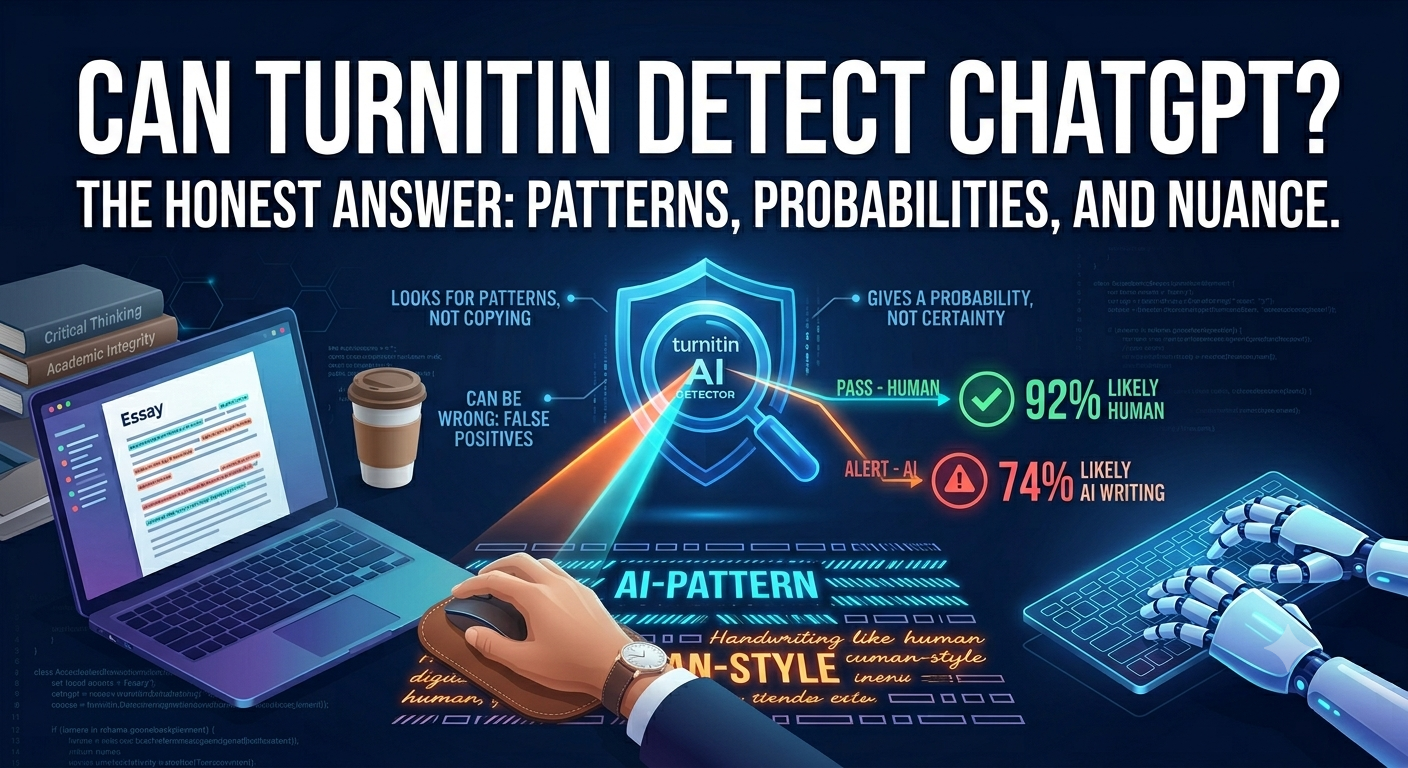
No. Your similarity score and your AI writing score are two separate numbers. Similarity checks how much of your text matches existing sources. The AI score estimates how much of your writing looks like it was generated by a tool such as ChatGPT.
You can have a low similarity score and a high AI score at the same time. If you want to understand that second number, read the Turnitin AI score explained.
How can I check my similarity score before I submit?
Most students cannot run their own Turnitin report. Access is controlled by your instructor, and many courses only show your score after you submit, when it is too late to fix anything. We explain why students can check Turnitin before submitting.
This is the gap Plag Check fills. You upload your document, we run it through Turnitin, and you get your full similarity and AI report in about 15 minutes. No account, and your paper is never stored in any university database. Check your Turnitin score now.
Frequently asked questions
What is a good Turnitin similarity score?
Under 15 to 20% is widely treated as a good score, provided the matches come from cited quotes and references. There is no fixed pass mark, so check your course rules.
Is a 30% similarity score bad?
Not always. A 30% score can be fine if the matches are quotes, citations, and common phrases. It becomes a problem when it comes from copied or poorly paraphrased text. See our guide on whether 30% is bad.
Does Turnitin similarity mean plagiarism?
No. Similarity only shows matching text. Your instructor decides whether it counts as plagiarism after reviewing the report.
Can I lower my similarity score?
Yes. Exclude quotes and references where allowed, paraphrase properly in your own words, and cite every source. Our reduce your similarity score guide covers the legitimate methods.
What score do I need to pass?
There is no single passing number. Most courses accept under 15 to 20%, but always confirm with your tutor or handbook.